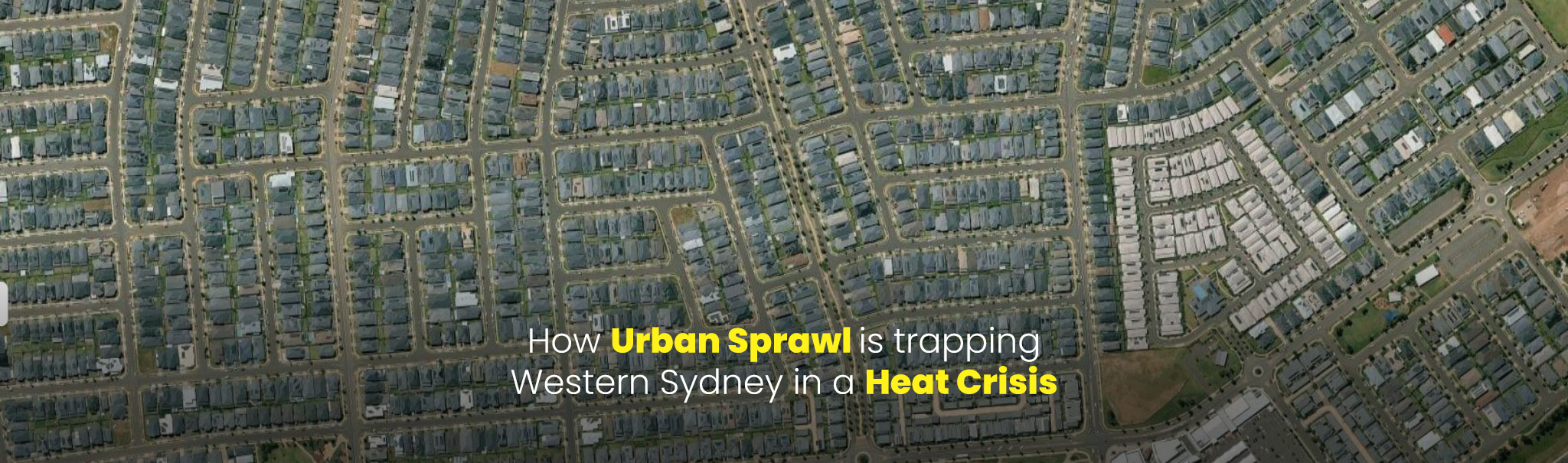
Western Sydney — Frontline of the Heat Crisis
Western Sydney is at the frontline of Australia’s heat crisis. Each summer, temperatures soar higher than ever, with some suburbs recording more than 10 °C above coastal areas. Yet despite the scientific evidence and lived experience, new developments continue to sprawl across Western Sydney’s landscape, replacing bushland with concrete, steel, and dark roofs.
To understand why this pattern persists and what can be done, we spoke with Professor Sebastian from Western Sydney University, whose research and advocacy expose the systemic failures that are locking Western Sydney into an increasingly unlivable future.
“We Knew This Would Happen”: The Cost of ignoring Science
When asked about the main causes of Western Sydney’s worsening heat conditions, Professor Sebastian was direct:
He stressed that the knowledge to build better suburbs already exists. Developments such as Jordan Springs and Marsden Park have long revealed the devastating outcomes of poor planning, yet the same patterns are being repeated.
Suburbs dominated by black roofs, single-glazed windows and little insulation trap heat and push residents to rely heavily on-air conditioning. But as heat waves grow more frequent, energy systems will falter:
This, he warned, is not a matter of if but when.
The “Australian Dream” or the “Australian Nightmare”?
The desire for a detached home on a private lot, often described as the Australian dream has become, in Sebastian’s words, the Australian Nightmare.
By 2030, over 340,000 new residents are projected to move into areas already among the hottest in Sydney. Each new subdivision adds more impervious surfaces, fewer trees and higher emissions, worsening the conditions for those who live there.
Rethinking Density: Building Neighborhoods, Not Towers
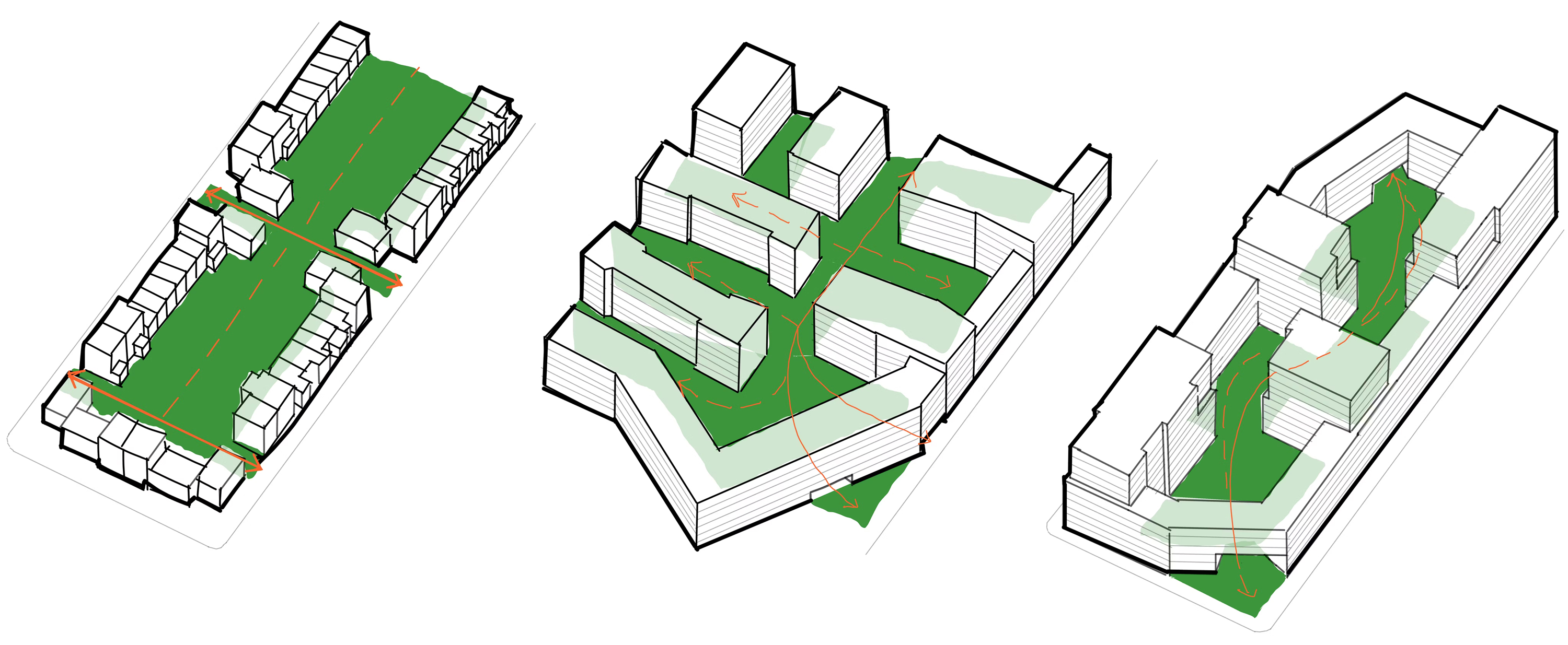
Credit: WXY Studio.
In response to our question about whether mid-rise housing “the missing middle” could provide a better alternative, Sebastian emphasized that densification is necessary, but it must be done intelligently:
He supported Transport-Oriented Development (TOD) as a sound idea – concentrating density around transport hubs but noted that Sydney’s implementation often lacks quality and foresight.
The Role of Architects: From Designers to Advocates
In the second part of our conversation, we discussed the architect’s role in changing this trajectory. Sebastian’s answer was sobering:
But he insisted that advocacy is central to the architect’s responsibility:
Sebastian encouraged us, to use design as a tool for advocacy, integrating sustainability, equity and livability in every project, no matter the scale.
Retrofitting the Suburbs: The Challenge of Change
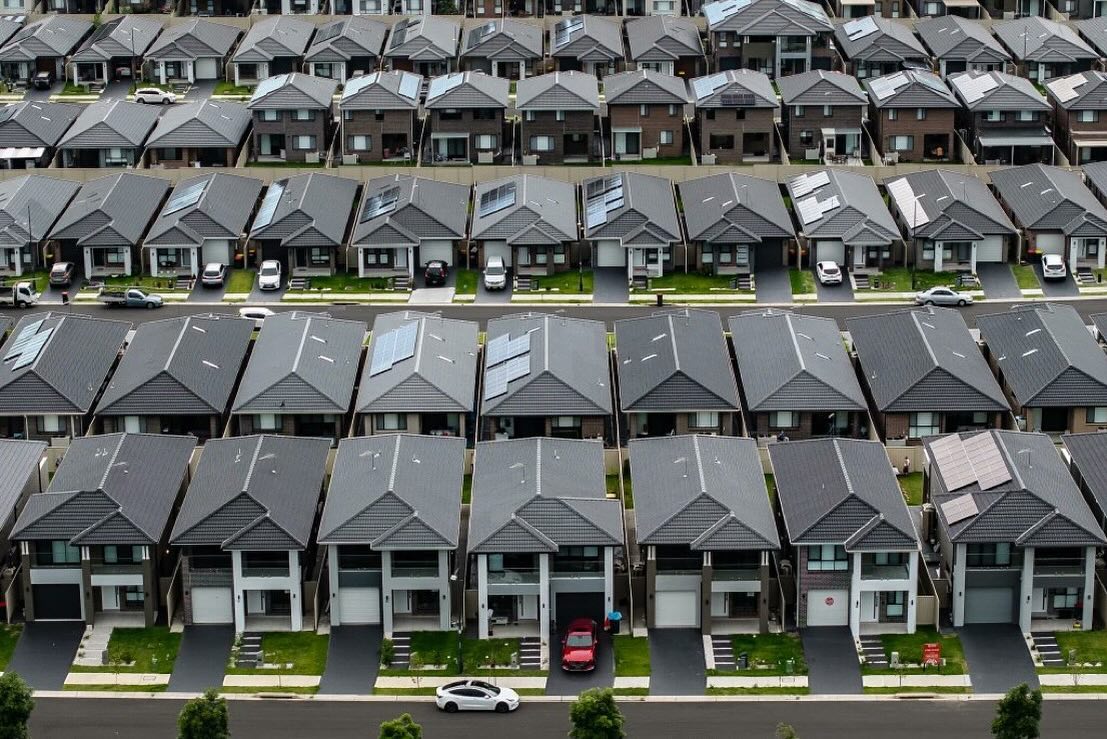
https://www.instagram.com/thetransitguy/
When discussing the possibility of retrofitting existing suburbs like Marsden Park, Sebastian cautioned that small interventions can only go so far: “Rewilding or greening setbacks looks nice, but unless we address systemic planning issues, it’s just a feel-good exercise.”
He emphasized the importance of “de-paving”: reducing hard surfaces to restore permeability and cooling.
Examples such as European play streets demonstrate that redesigning public streetscapes with shaded mobility spaces, fewer driveways and integrated green infrastructure can transform local microclimates.
Governance, Economics and Lost Canopies
One of the starkest contradictions, Sebastian noted, lies between government goals and development practices. “The government wants 40% canopy coverage, but they allow densification that removes the very trees that provide it. The canopy we lose today will not return in our lifetime.”
Towards Loveable Cities
In closing, Professor Sebastian left us with a powerful thought:
Western Sydney’s heat crisis is not inevitable, it is a result of choices. And as future architects, planners and researchers, our role is to make better ones, to advocate, design and build environments that heal rather than harm.
Western Sydney — Frontline of the Heat Crisis
Our cities are getting warmer, some at a faster rate than others. While the issue of urban heat has long been discussed within academic circles, it’s worth asking: to what extent are everyday residents aware of this growing problem?
To better understand how people are coping with rising temperatures, we conducted a survey asking residents what they do when it gets too hot, and how heat has affected their daily lives. This article explores key findings behind the survey, aiming to both raise awareness and amplify the voices of those directly experiencing the impacts of urban heat.
Key Findings
When asked whether they believe their homes are designed to keep them cool, residents shared a range of responses.
One person noted,
“Partially, the house has some insulation and ceiling fans, but it still gets very hot indoors during summer. Without air conditioning it would be unbearable”, another person added.
Across most responses, many residents expressed that they rely heavily on air conditioning systems to stay cool during heatwaves.
Participants where then invited to share their opinions on what changes would make the areas more comfortable in summer. In this question, there was a consensus around having more shading and green infrastructure.
One person noted,
Another person suggested:
Finally, when asked about What are their views regarding recent developments, particularly in the Western suburbs, one of the responses was:
“Older people cannot handle heat, older people can die because of heat,”
We also captured peoples’ health concerns; some people expressed that heat exacerbate their pre-existing cardiac problems.
One person also added,
What these Results Reveal
These results indicate that residents have a solid understanding of both the causes of urban heat and potential ways to mitigate it. What stood out most, however, was the heavy reliance on energy to maintain thermal comfort.
This common response highlights how daily life has become dependent on constant access to electricity, and how suburban planning often assumes uninterrupted energy supply. Such reliance not only shapes how people adapt to heat, but also exposes them to significant risk if electricity were ever to fail.
Our Duty Moving Forward
We see it as our responsibility to advocate for people’s wellbeing, particularly when challenges arise because of design and policy decisions.
This survey marks the first step in our project to advocate for urban environments that respond to heat, enhance comfort, and prioritise the wellbeing of the people who occupy them.